How much is statutory sick pay?
Statutory Sick Pay, or SSP, is £123.25 a week in 2026/27, or 80% of your average weekly earnings if that is lower. Your employer pays it for up to 28 weeks, from your first full day off sick. Since 6 April 2026 there are no unpaid waiting days and no minimum earnings to qualify.
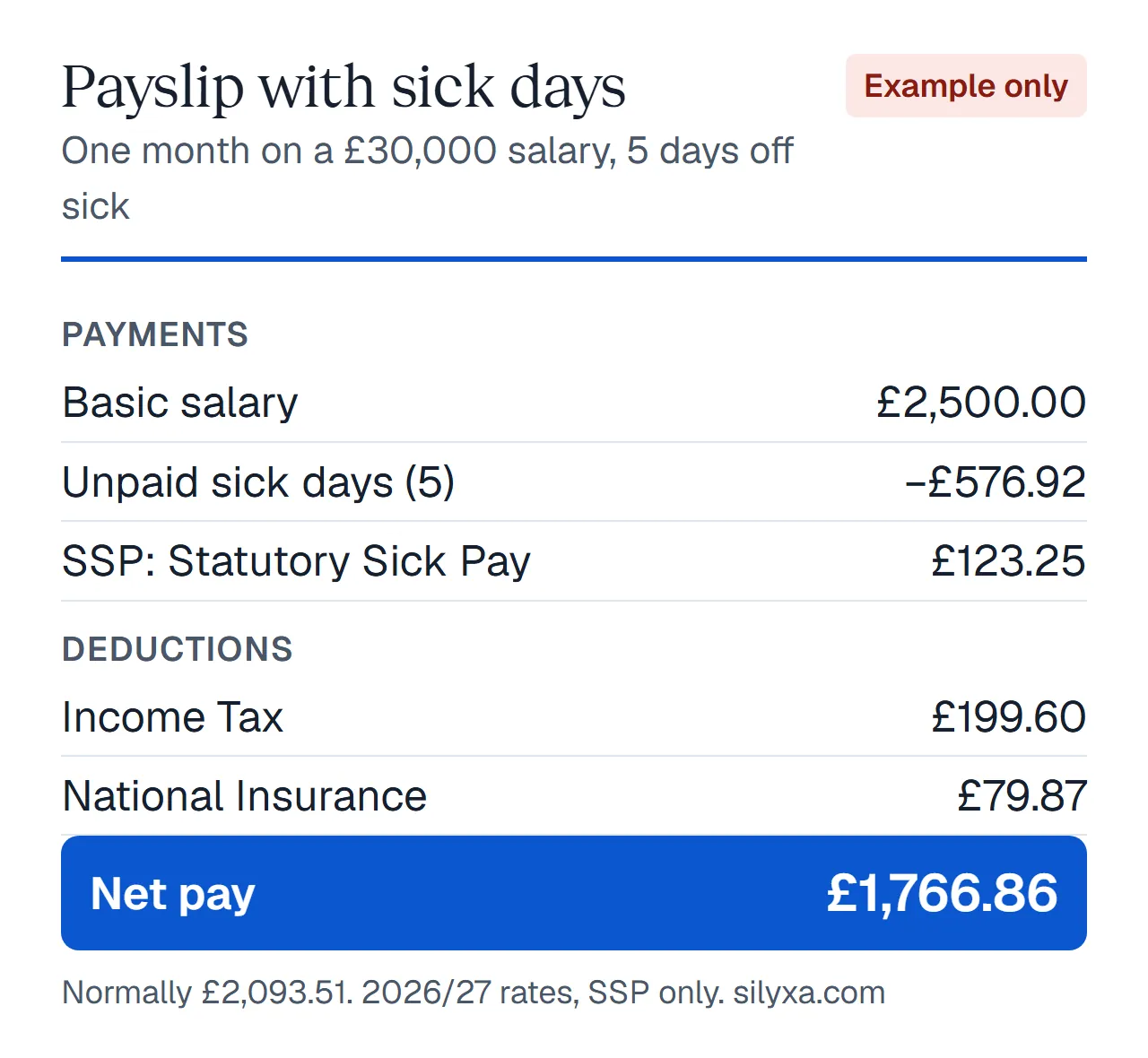
On £30,000 a year, a week off sick pays £123.25 of SSP instead of £576.92 of normal pay. That month, your take-home is about £1,766.86 instead of £2,093.51.
How much is SSP a day?
SSP is paid for the days you would normally have worked, called qualifying days. The daily rate is the weekly rate divided by the number of days you work a week, so it depends on your working pattern, not your hours.
| Days you work a week | SSP a day |
|---|---|
| 1 day | £123.25 |
| 2 days | £61.63 |
| 3 days | £41.08 |
| 4 days | £30.81 |
| 5 days | £24.65 |
| 6 days | £20.54 |
| 7 days | £17.61 |
So for a 3 day week, SSP is £41.08 a day. A full week off is paid at the weekly rate, £123.25, whatever your pattern.
Is SSP 80% of your salary?
Only if you earn less than £154.06 a week, about £8,011 a year. Below that, 80% of your average weekly earnings is less than £123.25, so that's what you get. Earn £120 a week, for example, and SSP is £96.00 a week. Above it, everyone gets the same £123.25, which is far less than 80% of a typical salary.
What a week off sick does to your take-home
You lose your normal pay for the days off and get SSP instead. But Income Tax and National Insurance fall as well, so your take-home drops by less than the pay you lose.
| Salary | Pay lost before tax | Take-home lost |
|---|---|---|
| £20,000 | £261.37 | £188.26 |
| £30,000 | £453.67 | £326.78 |
| £40,000 | £645.98 | £465.10 |
| £60,000 | £1,030.60 | £584.81 |
Company sick pay and SSP
Many employers pay more than SSP, often full pay for a few weeks and then half pay. This is called company or contractual sick pay, and your contract or staff handbook sets it out. It usually includes your SSP rather than adding to it, so you get whichever is higher.
With 4 weeks of full pay and 4 weeks of half pay on £30,000, 8 weeks off pays £3,461.54 in sick pay, and your take-home over that time falls by £830.94. Choose Company sick pay above and enter your own weeks.
How long does SSP last?
Up to 28 weeks for one spell of sickness. Spells 8 weeks or less apart are linked and count as one, so SSP you've already had in a linked spell counts towards the 28 weeks. Enter it in SSP weeks already used.
If your SSP is going to run out while you're still ill, your employer must send you form SSP1 by the start of week 23. You can use it to claim Universal Credit or Employment and Support Allowance.
Sick pay questions
Is statutory sick pay taxable?
Yes. SSP is paid through payroll like your wages, and Income Tax and National Insurance come off it. This calculator shows what's left.
Does statutory sick pay include weekends?
Only if you normally work weekends. SSP is paid for your qualifying days, which are usually the days you normally work.
Is statutory sick pay pro rata for part-time workers?
The weekly rate isn't cut for working part-time. It's spread over the days you work, so a part-time worker off for a full week gets the same £123.25, unless 80% of their earnings is lower.
When does statutory sick pay start?
From your first full day off sick, since 6 April 2026. Before then, the first 3 days were unpaid.
Do I need a fit note?
Not for the first 7 days. If you're off for more than 7 days in a row, including days you don't normally work, your employer can ask for one. A GP, hospital doctor, nurse, pharmacist, physiotherapist or occupational therapist can give you one.
Can I get SSP on a zero-hours contract?
Yes, if you're classed as an employee and have done some work for your employer. Agency workers can also qualify.
How do I calculate SSP?
Take the lower of £123.25 and 80% of your average weekly earnings. Divide it by the days you work a week to get the daily rate, then multiply by your days off. Full weeks are paid at the weekly rate.
What if my employer won't pay SSP?
Ask them for the reason. If that doesn't sort it out, contact HMRC's Statutory Payment Disputes Team.
Sources
Checked on 7 November 2026 against the 2026/27 tax year.