
How to work out backdated pay
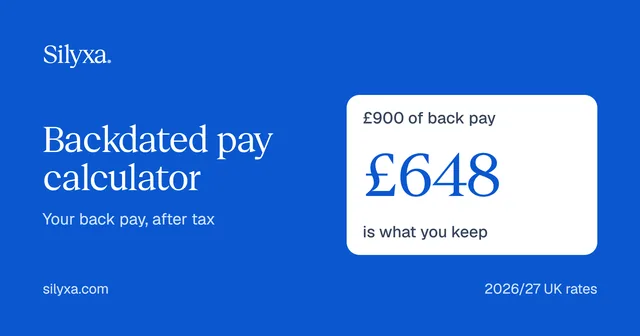
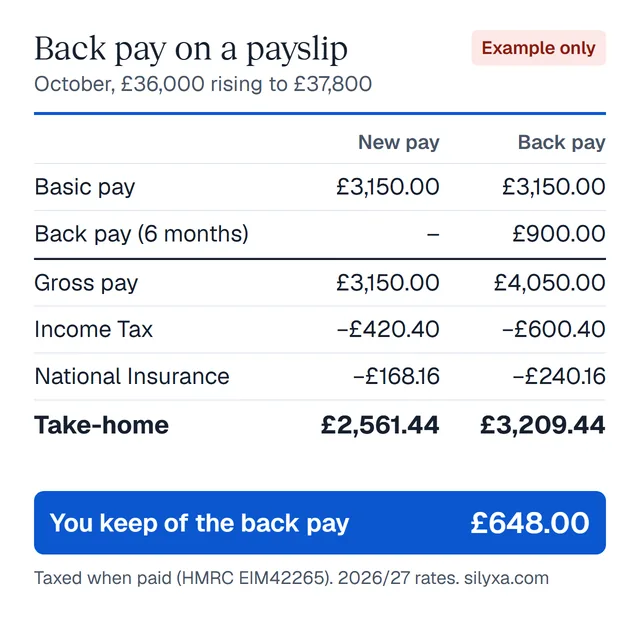
Take the yearly rise, divide it by 12, and multiply by the number of months it is backdated. A rise from £36,000 to £37,800 is £1,800 a year, or £150.00 a month, so backdated 6 months it is £900.00 before tax. If overtime, unsocial hours or other enhancements are paid at a rate tied to your salary, they go up by the same percentage, and the difference on those is back pay too: £400 a month of overtime adds £120.00 here.
| Salary | Rise | Back pay | You keep | Share kept |
|---|---|---|---|---|
| £25,000 | 3% | £375.00 | £270.00 | 72.0% |
| £30,000 | 4% | £600.00 | £432.00 | 72.0% |
| £36,000 | 5% | £900.00 | £648.00 | 72.0% |
| £45,000 | 4% | £900.00 | £684.66 | 76.1% |
| £60,000 | 3% | £900.00 | £522.00 | 58.0% |
Is backdated pay taxed more?
Not over the year. HMRC treats a backdated pay award as received when it is paid (HMRC manual EIM42265), so it goes through that month's payslip and is taxed at your top rate, like a bonus. On £36,000 rising to £37,800, the £900.00 has £180.00 of Income Tax and £72.00 of National Insurance, and you keep £648.00.
The month it is paid can look over-taxed. PAYE works on your pay for the tax year so far, so back pay early in the year can be taxed at 40% that month even if your year stays in the basic rate, and the extra comes back in the months after on a normal tax code. On £45,000 rising to £47,250 backdated a year, £2,250.00 paid in April has £849.47 of tax taken that month, against £450.00 over the year, so £399.47 comes back.
| Paid in | Tax that month | Its share of the year | Comes back later | You keep |
|---|---|---|---|---|
| April | £849.47 | £450.00 | £399.47 | £1,739.91 |
| July | £585.47 | £450.00 | £135.47 | £1,739.91 |
| October | £450.00 | £450.00 | £0.00 | £1,739.91 |
| January | £450.00 | £450.00 | £0.00 | £1,739.91 |
When back pay pushes you into 40% tax
If the back pay takes your taxable pay for the year over £50,270 (England, Wales and Northern Ireland), the part above it is taxed at 40%. A rise from £48,000 to £50,400 backdated a full year and paid in June leaves £1,448.00 of the £2,400.00. More into your pension through salary sacrifice or net pay can bring the year back under the line; try a higher pension under More options.
National Insurance and student loan on back pay
These are worked out on the pay of the month the back pay is paid in, on its own, no matter when it was earned (HMRC employer guide CWG2, section 1.12), so they don't even out. National Insurance is 8% up to £4,189 of that month's pay and 2% above, which can mean slightly less NI than if the rise had been paid on time. Student loan is 9% of the month over the monthly threshold: on £28,000 rising to £29,400, 9 months paid in April on Plan 2 sends £94.50 to the loan. If your income for the year stays under your plan's yearly threshold, you can ask the Student Loans Company for it back after the year ends.
Back pay that goes back into last tax year
A pay award agreed now and backdated to before 6 April is still taxed in the year it is paid. HMRC's own example taxes a backdated award in 2024/25, even though it relates to 2023/24 (EIM42265). So the whole amount goes through this year's payslip, and the calculator goes back up to 36 months. Pay you were already entitled to on the right date but got late, such as a missed March salary, is different: it belongs to the year it was due.
If you've left before the back pay is paid
Back pay from an award agreed after you left is paid after your P45. Your old employer works out National Insurance on a weekly earnings period at the rates in force when it is paid (CWG2, section 1.14), so the deductions can differ from this calculator, which assumes you still work there.
Backdated pay questions
How is backdated pay calculated?
The yearly rise divided by 12, times the months backdated, plus the same percentage rise on overtime and enhancements tied to your pay. £1,800 a year backdated 6 months is £900.00 before tax.
Is backdated pay taxed at 40%?
Only the part that takes your income for the year over £50,270. The month it's paid can look like 40% because PAYE works on the year so far, and the extra comes back later on a normal code.
Is it better to get back pay as a lump sum?
Over the year, Income Tax is the same either way. National Insurance and student loan can differ a little because they work on each month alone; the Checks tab shows the difference for your figures. A bonus paid in one month is taxed the same way, as the bonus tax calculator shows.
Will I get the tax back?
Overpaid Income Tax comes back in later months on a normal tax code, or after the year on an emergency code. National Insurance doesn't come back, because each month stands alone.
Is this official?
No. It follows HMRC's rules and employer guide, but your employer's payroll makes the final calculation, and their pay dates and your tax code can change the month you see.
How this calculator works
Backdated pay multiplies the yearly rise by the months backdated, divided by 12, plus the same percentage rise on any regular extra pay. HMRC taxes a backdated pay award when it is paid (Employment Income Manual EIM42265), so the back pay is added to the pay of the month it is paid in, with your new pay from that month on. Income Tax is cumulative PAYE; National Insurance and student loan are worked out on that month's pay alone (CWG2, section 1.12). What you keep is the year's take-home with the back pay less the year's take-home without it, assuming monthly pay and a full year in the job. Pay owed after you leave is not covered.
Sources
Checked on 13 November 2026 against the 2026/27 tax year.
- HMRC Employment Income Manual EIM42265: arrears of pay and backdated pay
- GOV.UK Employer further guide to PAYE and National Insurance, sections 1.12 and 1.14 (payments after leaving)
- GOV.UK Student loan repayment guidance for employers
- GOV.UK What your tax code means
- GOV.UK Income Tax rates and allowances
Update history
- 13 November 2026: Added.